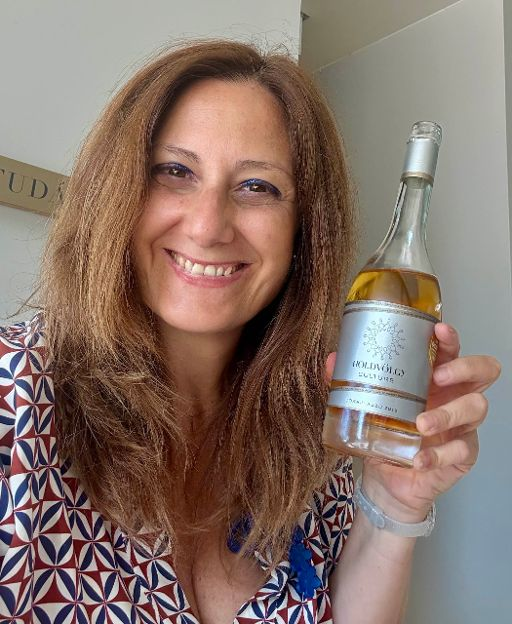
Holdvölgy. Il volto contemporaneo del Tokaj
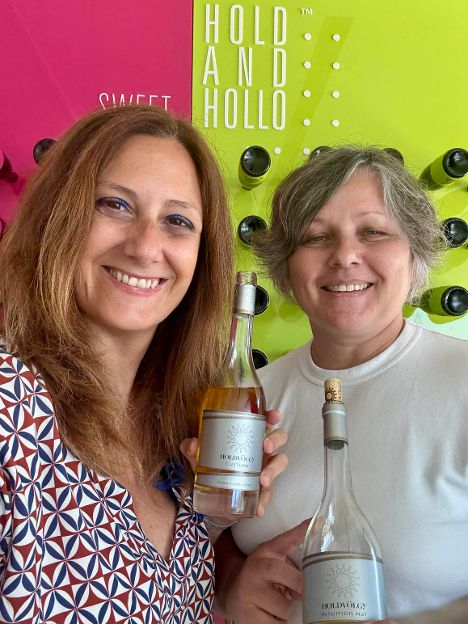
Nel Paradiso, Dante inaugura la sua ascesa dal cielo della Luna. È il primo cielo, quello da cui prende avvio il cammino verso una conoscenza più alta, dove la luce non appartiene all’astro che la riflette, ma proviene da altrove. Forse non è un caso che, nel cuore di Mád, una delle cantine più affascinanti del Tokaj abbia scelto di chiamarsi proprio Holdvölgy, la Valle della Luna.
Per comprenderla, però, non bisogna alzare lo sguardo verso il cielo. Bisogna fare il contrario: scendere nelle viscere della terra.
Una scalinata conduce in un dedalo di gallerie che si insinuano nella riolite vulcanica, formando un labirinto di chilometri scavato dall’uomo nel corso dei secoli. È impossibile attraversarlo senza che la memoria corra, almeno per un istante, al labirinto di Cnosso. Qui non attendono né il Minotauro né Teseo e non occorre il filo di Arianna per ritrovare la via. Il filo esiste comunque, ma è invisibile. E’ quello della storia, che accompagna il visitatore lungo un percorso nel quale geologia, memoria e vino finiscono per intrecciarsi.
Ad accompagnare la visita è Natalia Demko dagli occhi chiari e la pelle candida. Di madre francese e padre ungherese, racconta questi luoghi con la precisione di chi ne conosce ogni stratificazione, storica e geologica. Le gallerie, spiega, furono scavate oltre cinque secoli fa per custodire il vino. La tradizione locale le collega alle incursioni ottomane, mentre è documentato il loro utilizzo come rifugio durante la Seconda guerra mondiale, quando gli abitanti di Mád vi trovarono riparo dai bombardamenti. Camminando tra quelle volte umide viene spontaneo chiedersi quante vite, quante paure e quante speranze siano rimaste imprigionate in questo silenzio, oggi interrotto soltanto dal lento riposo delle bottiglie.
Le pareti delle cantine mostrano, come un atlante aperto, gli strati delle antiche eruzioni vulcaniche che, milioni di anni fa, hanno modellato questo territorio. Tufi riolitici, ceneri consolidate e rocce di diversa origine si lasciano osservare direttamente, trasformando il concetto di terroir in qualcosa di sorprendentemente concreto. Natalia accompagna il visitatore tra le mappe dei dűlő, i cru storici di Mád, leggendo il paesaggio come una carta geologica. Ogni parcella possiede una propria identità, ogni esposizione modifica il carattere dell’uva, ogni affioramento vulcanico lascia un’impronta riconoscibile nel vino. Prima ancora che nel calice, il Tokaj si comprende nella roccia da cui nasce.
La degustazione avviene all’interno del percorso.
Vision Dry Estate Selection 2021, un assemblaggio di Furmint, Hárslevelű e Kabar. Il giallo paglierino luminoso introduce un bouquet nel quale la frutta gialla ancora acerba si accompagna a un elegante accenno di idrocarburo, quasi un ricordo di cherosene. Il sorso è vibrante, sostenuto da una freschezza che accompagna una lunga scia minerale. È il vino della scoperta. Viene spontaneo pensare allo thaumazein di Aristotele, quella meraviglia che, secondo il filosofo, rappresenta l’origine di ogni conoscenza. Holdvölgy sceglie di iniziare proprio così, non con l’ostentazione della potenza, ma con l’eleganza della precisione.
Con Expression Tokaji Hárslevelű 2022, proveniente dal prestigioso dűlő Becsek, è il territorio a imporsi definitivamente sul vitigno. La mineralità acquista profondità, la persistenza si allunga e il vino sembra dilatarsi nel calice ad ogni sorso. Plinio il Vecchio, nella Naturalis Historia, osservava come la natura cambiasse volto da un luogo all’altro. Questo Hárslevelű sembra confermarlo. Pochi metri di suolo possono modificare radicalmente l’identità di un vino. Qui la roccia parla con una voce discreta, ma autorevole.
L’emozione cresce ulteriormente con Intuition No. 3 Tokaji Furmint 2020, 100% Furmint proveniente ancora dal cru Becsek. Il nome richiama inevitabilmente Henri Bergson, per il quale l’intuizione costituisce una forma di conoscenza capace di andare oltre l’analisi razionale. È esattamente ciò che accade davanti a questo vino. La tecnica riesce a descriverne l’equilibrio, la verticalità e la straordinaria persistenza, ma non basta a spiegarne la profondità. Da un certo momento in poi occorre semplicemente lasciarsi guidare dal sorso.
Di carattere completamente diverso è Intuition No. 2 Tokaji Sárgamuskotály, proveniente dal dűlő Nyulászó. Il naso è immediatamente espansivo, seducente, ricco di richiami floreali e fruttati; la bocca sorprende cambiando improvvisamente registro, diventando asciutta, rigorosa e decisamente minerale. Viene quasi da pensare al teatro greco, dove una stessa maschera era capace di esprimere emozioni differenti. Anche questo vino gioca sul contrasto. Promette morbidezza all’olfatto e restituisce energia e tensione al palato.
Con Exaltation 2018, ancora da Sárgamuskotály del cru Nyulászó, il vitigno raggiunge una maturità diversa. Le componenti aromatiche acquistano profondità senza perdere luminosità, mentre freschezza e sapidità continuano a sostenere il sorso con naturale equilibrio. È un vino che sembra costruito per sottrazione, dove ogni elemento trova il proprio posto senza mai prevalere sugli altri.
Il percorso prosegue con Signature 2013, probabilmente il vino che meglio racconta la filosofia produttiva di Holdvölgy. Non nasce come semplice assemblaggio di vitigni, ma dall’incontro di vini differenti, selezionati nel tempo per raggiungere un’armonia comune. Ricorda un mosaico bizantino. Ogni tessera mantiene la propria individualità, ma soltanto accanto alle altre rivela il disegno complessivo. L’ambra chiara anticipa una dolcezza composta, mai invadente, continuamente sorretta dalla freschezza e da una sottile vena sapida che accompagna il lunghissimo finale.
Tra i vini più affascinanti figura Intuition No. 1 Tokaji Zéta Szamorodni 2017, ottenuto esclusivamente dal raro vitigno Zéta. Il colore è oro brillante; il bouquet richiama pesca matura, leggere sfumature balsamiche e una delicata nota di menta che dona slancio al sorso. L’equilibrio tra dolcezza e freschezza richiama quel principio di misura che attraversa tutta la cultura classica. L’armonia nasce quando nessun elemento prevale sull’altro. È un vino che trova un felice compagno in un pecorino di fossa servito con miele di zagara e scorze di cedro candite, dove aromaticità, sapidità e dolcezza dialogano con sorprendente naturalezza.
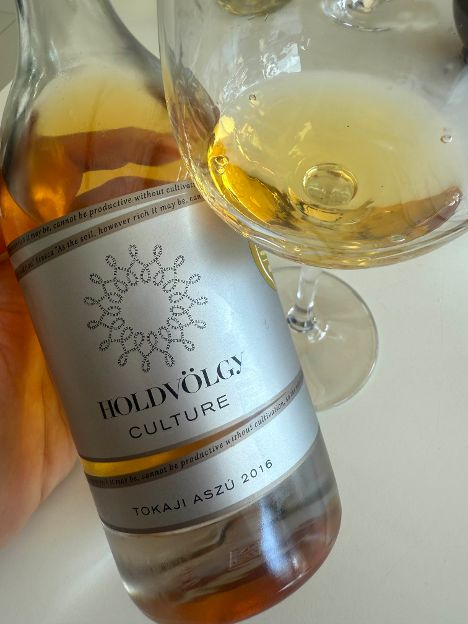
La degustazione si conclude con Culture Tokaji Aszú 6 Puttonyos 2016, autentica sintesi della tradizione di Tokaj. Il bouquet si apre con nocciola, noce, zagara, crema al limone e delicate note di caramella al miele, alle quali seguono albicocca candita e scorza d’arancia. È inevitabile ricordare Luigi XIV, che definì il Tokaji Vinum Regum, Rex Vinorum, «il vino dei re e il re dei vini». Eppure la sua regalità non risiede soltanto nella ricchezza aromatica o nella concentrazione della dolcezza. La vera grandezza è nella disciplina. Un’acidità viva e luminosa governa ogni componente, impedendo al vino di diventare opulento. Il finale è interminabile e riporta alla memoria la pietra vulcanica attraversata all’inizio del percorso, chiudendo idealmente il cerchio.
Holdvölgy rappresenta una delle interpretazioni più moderne e lungimiranti del Tokaj. La sua forza non consiste nell’inseguire le tendenze del mercato, ma nel leggere il territorio con rigore quasi scientifico e restituirlo nel calice senza mediazioni superflue. Ogni dűlő diventa un racconto, ogni vino un capitolo, ogni sorso la dimostrazione che il futuro del Tokaj può nascere soltanto dalla conoscenza più profonda della sua storia e della sua terra.
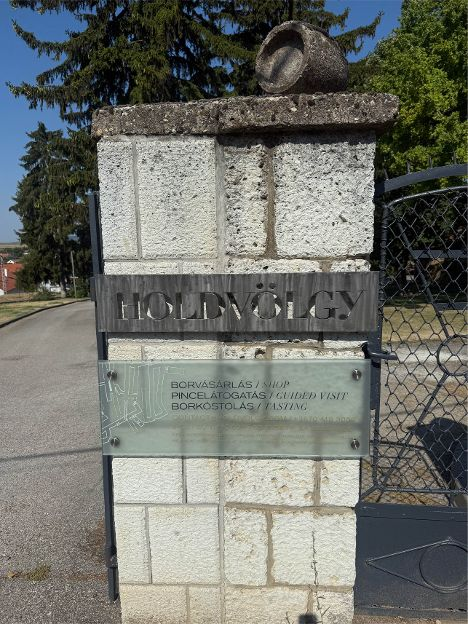
In the Paradiso, Dante begins his ascent from the Sphere of the Moon. It is the first of the celestial spheres, where the journey toward higher knowledge begins, a realm in which light does not belong to the body that reflects it, but comes from elsewhere. Perhaps it is no coincidence that, in the heart of Mád, one of Tokaj’s most fascinating wineries chose to call itself Holdvölgy, the Valley of the Moon.
To understand it, however, one should not look up to the sky. Quite the opposite: the journey begins by descending into the depths of the earth.
A staircase leads into a maze of underground galleries carved through volcanic rhyolite, forming a labyrinth stretching for kilometres, patiently excavated by human hands over the centuries. It is impossible to walk through these tunnels without, for a brief moment, recalling the Labyrinth of Knossos. Here, however, neither the Minotaur nor Theseus awaits, and Ariadne’s thread is no longer needed to find the way out. Yet there is still a thread to follow, though it is invisible: the thread of history, guiding visitors through a place where geology, memory and wine become inseparably intertwined.
Leading the visit is Natalia Demko, whose clear eyes and porcelain complexion reflect her French and Hungarian heritage. She speaks about these underground passages with the confidence of someone who knows every historical and geological layer they conceal. As she explains, the galleries were excavated more than five centuries ago to protect wine. Local tradition associates them with the Ottoman incursions, while historical records confirm that they later served as shelters during the Second World War, when the inhabitants of Mád sought refuge here from aerial bombardments. Walking beneath these damp vaults, one cannot help wondering how many lives, fears and hopes still linger in the silence, now disturbed only by the quiet rest of thousands of bottles.
The cellar walls reveal, like the pages of an open geological atlas, the successive layers left by ancient volcanic eruptions that shaped this landscape millions of years ago. Rhyolitic tuffs, consolidated volcanic ash and rocks of different origins can be observed directly, transforming the concept of terroir into something remarkably tangible. Natalia guides visitors through the maps of the historic dűlő vineyards of Mád as if reading a geological survey rather than a vineyard map. Every parcel possesses its own identity, every exposure influences the character of the grapes, and every volcanic outcrop leaves a distinctive imprint on the wine. Long before it reaches the glass, Tokaj can already be understood through the rock from which it is born.
The tasting unfolds naturally within this underground journey.
The tasting begins with Vision Dry Estate Selection 2021, a blend of Furmint, Hárslevelű and Kabar. Its brilliant straw-yellow colour introduces a bouquet in which crisp yellow fruit is accompanied by an elegant hint of petroleum, reminiscent of kerosene. On the palate, the wine is vibrant, driven by lively acidity that carries a long, mineral finish. It is a wine of discovery. One cannot help but think of Aristotle’s thaumazein—the sense of wonder that, according to the philosopher, lies at the origin of all knowledge. Holdvölgy chooses to begin precisely here: not with an ostentatious display of power, but with the quiet elegance of precision.
With Expression Tokaji Hárslevelű 2022, sourced from the prestigious Becsek dűlő, it is the vineyard itself that ultimately prevails over the grape variety. The mineral character deepens, the persistence lengthens, and the wine seems to expand in the glass with every sip. In his Naturalis Historia, Pliny the Elder observed how nature changes its face from one place to another. This Hárslevelű appears to confirm his intuition: only a few metres of soil can radically transform the identity of a wine. Here, the volcanic rock speaks with a discreet yet unmistakably authoritative voice.
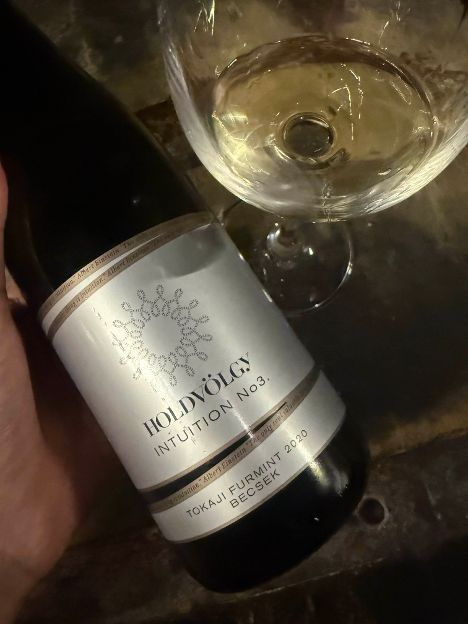
The experience reaches another level with Intuition No. 3 Tokaji Furmint 2020, a single-varietal Furmint once again sourced from the Becsek cru. Its name inevitably recalls Henri Bergson, for whom intuition represented a form of knowledge capable of transcending rational analysis. That is precisely what happens in front of this wine. Technical tasting language can describe its balance, verticality and extraordinary persistence, yet it remains insufficient to explain its true depth. At a certain point, analysis gives way to experience, and the only thing left to do is surrender to the wine itself.
Entirely different in character is Intuition No. 2 Tokaji Sárgamuskotály, produced from grapes grown in the Nyulászó dűlő. The nose is immediately expansive and seductive, bursting with floral and fruity aromas. Then the palate unexpectedly changes direction, revealing a wine that is dry, disciplined and distinctly mineral. It evokes the masks of ancient Greek theatre, capable of expressing contrasting emotions while remaining the same face. This wine thrives on contrast: it promises softness on the nose, only to deliver energy, tension and remarkable precision on the palate.
With Exaltation 2018, another Sárgamuskotály from the Nyulászó cru, the variety reaches a different stage of maturity. Its aromatic complexity gains depth without sacrificing brightness, while freshness and salinity continue to support the palate with remarkable natural balance. It is a wine built through restraint, where every element finds its place without ever dominating the others.
The journey continues with Signature 2013, perhaps the wine that best expresses Holdvölgy’s philosophy. It is not simply a blend of grape varieties, but the meeting of different wines, patiently selected over time until they achieve a shared harmony. It recalls a Byzantine mosaic: each individual tessera retains its own identity, yet only together do they reveal the complete design. Its pale amber hue anticipates a composed sweetness that never becomes intrusive, constantly sustained by vibrant acidity and a delicate saline thread that carries the wine through an exceptionally long finish.
Among the most captivating wines of the tasting is Intuition No. 1 Tokaji Zéta Szamorodni 2017, produced exclusively from the rare Zéta grape variety. Brilliant golden in colour, it opens with aromas of ripe peach, delicate balsamic nuances and a subtle hint of mint that lends freshness and lift to the palate. The balance between sweetness and acidity recalls the classical ideal of moderation, where harmony is achieved only when no single element overpowers the others. It finds an outstanding companion in aged Pecorino di Fossa served with orange blossom honey and candied citron peel, a pairing in which aromatic intensity, savoury depth and sweetness converse with remarkable naturalness.
The tasting concludes with Culture Tokaji Aszú 6 Puttonyos 2016, an authentic expression of Tokaj’s centuries-old tradition. The bouquet unfolds with hazelnut, walnut, orange blossom, lemon cream and delicate notes of honey candy, followed by candied apricot and orange zest. It is impossible not to recall the words attributed to Louis XIV, who famously described Tokaji as Vinum Regum, Rex Vinorum—”the Wine of Kings and the King of Wines.” Yet its nobility lies not merely in its aromatic richness or concentrated sweetness. Its true greatness resides in its discipline: vibrant, luminous acidity governs every component, preventing the wine from ever becoming excessive. The finish is extraordinarily persistent, bringing the memory back to the volcanic stone encountered at the beginning of the journey and bringing the entire experience full circle.
Holdvölgy stands today as one of the most compelling and forward-looking interpretations of Tokaj. Its strength lies not in following market trends, but in reading the landscape with almost scientific precision and translating it into the glass without unnecessary intervention. Every dűlő becomes a story, every wine a chapter, every sip a reminder that the future of Tokaj can only emerge from a profound understanding of its history, its land and the intimate dialogue between the two.