Oremus: la grandezza è una questione di misura
Spesso ci si chiede perché alcune aziende riescano a crescere più di altre. Talvolta lo si fa con una punta d’invidia, più raramente con l’umiltà necessaria per comprenderne le ragioni. Eppure la grandezza, quasi mai, è un punto di partenza. È una costruzione.
Lo avevano già raccontato i Greci attraverso Eracle. Figlio di Zeus e Alcmena, reso folle da Era, l’eroe si macchia del più terribile dei delitti: uccide la moglie Megara e i propri figli. Per espiare la colpa dovrà affrontare le celebri fatiche impostegli da Euristeo. Dodici prove che, una dopo l’altra, trasformano la forza fisica in un percorso di purificazione, fino all’approdo finale all’immortalità. Il mito sembra ricordare che persino per un figlio di Zeus la grandezza non è concessa. Deve essere conquistata.
Anche nella vita di un’impresa il successo raramente nasce da un unico gesto. Si costruisce mediante scelte, investimenti, errori, attese e soprattutto attraverso la capacità di immaginare ciò che ancora non esiste.
Quando, nell’aprile del 1982, la famiglia Álvarez acquistò Vega Sicilia dall’imprenditore venezuelano Hans Neumann, acquisì una delle cantine più prestigiose della Ribera del Duero. Avrebbe potuto limitarsi a custodirne il mito. Scelse invece di costruire.
Pablo Álvarez, nato a Bilbao nel 1954 e laureato in Giurisprudenza, assunse la direzione generale di Vega Sicilia nel 1986 e ne divenne amministratore delegato nel 1990. Da allora il nome della famiglia cominciò progressivamente ad allontanarsi dai soli confini della storica tenuta. Nel 1991 nacque Alión, sempre nella Ribera del Duero, ma concepita con un’identità più moderna rispetto al classicismo di Vega Sicilia. Nel 1993 lo sguardo oltrepassò i confini spagnoli e raggiunse l’Ungheria, dove nacque Tokaj-Oremus. Nel 2001 arrivò Pintia, nella denominazione Toro. Nel 2013, dopo dodici anni di progettazione, fu la volta di Macán, in Rioja, nato dalla collaborazione tra Benjamin de Rothschild e Vega Sicilia.
Non una moltiplicazione indiscriminata di etichette, dunque, ma una progressione costruita cercando territori capaci di esprimere una propria identità. È la stessa azienda a definire il proprio modello di sviluppo come fondato sulla creazione di nuove cantine in aree dotate di un sufficiente potenziale qualitativo e differenziante.
Forse è proprio qui che si trova una delle ragioni per cui alcune aziende diventano grandi. Non replicano semplicemente ciò che ha già funzionato, ma accettano ogni volta una nuova prova.
E quella affrontata nel 1993 era tutt’altro che semplice. Soltanto tre anni dopo la fine del regime comunista in Ungheria, la famiglia Álvarez arrivò a Tokaj, in una regione dalla storia vinicola secolare, portando modernizzazione e tecnologia senza voler cancellare ciò che il tempo aveva costruito.
Scelse Oremus.
Un nome che, per chi conosce il latino, sembra non avere bisogno di spiegazioni: oremus, «preghiamo». E invece proprio qui comincia un’altra storia, legata probabilmente a un nome di persona, non a un verbo.
Ma forse l’aspetto più interessante di Vega Sicilia non è soltanto la capacità della famiglia Álvarez di costruire nuove realtà vinicole. È il modo in cui ha saputo rinnovare e conservare le relazioni umane.
In un’epoca nella quale il lavoro sembra avere perso progressivamente il senso della continuità, a Vega Sicilia accade qualcosa di quasi anacronistico: numerosi dipendenti sono nati nella tenuta e hanno ereditato dai propri genitori non soltanto un mestiere, ma un legame con l’azienda. Esistono famiglie che lavorano per Vega Sicilia da quattro generazioni. Padri e madri hanno potuto lasciare ai figli qualcosa che oggi appare sempre meno scontato, non semplicemente un posto di lavoro, ma la possibilità di continuare una storia.
Ed è forse anche questa una delle ragioni per cui alcune aziende diventano grandi mentre altre rimangono semplicemente aziende. Il capitale non è costituito soltanto da vigneti, cantine, bottiglie e bilanci. Esiste un capitale più difficile da costruire e impossibile da acquistare ovvero la fiducia. Quella che consente a una relazione professionale di attraversare il tempo e, in alcuni casi, persino le generazioni.
Eppure la continuità, da sola, potrebbe trasformarsi facilmente in immobilismo. La famiglia Álvarez sembra aver costruito il proprio percorso sul principio opposto: custodire ciò che merita di essere conservato e mettere continuamente in discussione ciò che può essere migliorato.
Non sentirsi mai arrivati.
È una filosofia che Pablo Álvarez ha condensato in poche parole: «Il miglior vino è sempre ancora da fare». Non una professione di falsa modestia, ma quasi un metodo imprenditoriale. Se il vino migliore deve ancora venire, ogni vendemmia diventa una nuova prova e ogni risultato raggiunto smette di essere un traguardo per trasformarsi in un punto di partenza.
Forse, allora, il richiamo iniziale alle fatiche di Eracle acquista un significato ulteriore. Non è il numero delle imprese compiute a rendere grande l’eroe, ma la necessità di affrontarne sempre una successiva. La grandezza non coincide con l’essere arrivati, ma con il non considerarsi mai definitivamente arrivati.
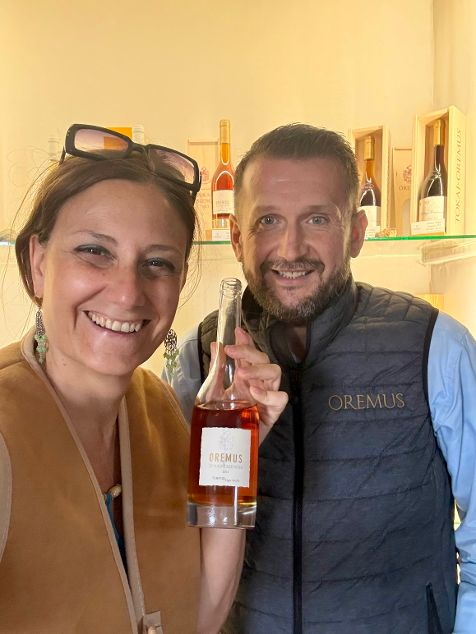
Tra i loro collaboratori emerge Ferenc Zelenák, dai begli occhi, la battuta pronta, lo sguardo vispo, l’empatia e soprattutto una profonda conoscenza del vino e del territorio. Oggi è brand ambassador di Tokaj-Oremus, ma il suo rapporto con Tokaj precede di molto qualsiasi incarico professionale. È nato e cresciuto qui e appartiene a una famiglia le cui radici nella storia vinicola della regione risalgono a oltre trecento anni fa.
Da entrambi i rami familiari il vino arriva quasi come un’eredità. I bisnonni materni erano autorizzati al trasporto del Tokaji Aszú. Il nonno, tornato dai campi di concentramento, negli anni difficili del regime comunista fondò una cooperativa indipendente per i viticoltori. E nella storia della famiglia entra persino uno dei capitoli più affascinanti della storiografia del Tokaj, suo zio, lo storico locale István Zelenák, individuò tra i documenti della famiglia Garai una testimonianza del 1571 nella quale compare l’“Asszú Szőlő Bor”, prova documentaria dell’esistenza dell’Aszú precedente alla celebre tradizione che ne attribuisce l’origine a Szepsi Laczkó Máté.
Ma nella storia di Ferenc c’è anche un curioso filo che lo lega personalmente a Oremus. Circa vent’anni fa, quando decise di trasferirsi a Londra per costruire il proprio percorso professionale e approfondire la conoscenza del vino, finanziò in parte quella scelta vendendo una parcella di vigneto nel Teleki Grand Cru proprio a Oremus/Vega Sicilia. A Londra avrebbe poi proseguito la propria formazione nel vino, anche attraverso gli studi WSET. Anni dopo, quel filo apparentemente interrotto lo avrebbe ricondotto nello stesso luogo, questa volta come ambasciatore di Tokaj-Oremus.
La sua storia finisce così per rappresentare concretamente quella capacità di costruire rapporti duraturi che costituisce uno dei tratti distintivi di Vega Sicilia. Perché alcune relazioni professionali non nascono semplicemente da un contratto, si costruiscono attraverso la conoscenza, la fiducia e un’appartenenza che il tempo finisce per consolidare.
Forse è anche per questo che ascoltare Ferenc significa comprendere Tokaj in maniera diversa. Non racconta un territorio semplicemente studiato, narra un territorio vissuto, ereditato e infine ritrovato. E quando la conoscenza tecnica incontra la memoria familiare, anche una degustazione smette di essere una successione di calici e diventa racconto.
Ed è proprio attraverso Ferenc che la vicenda lascia progressivamente la storia per entrare nel bicchiere. La degustazione diventa così un altro modo di percorrere Tokaj e, quasi naturalmente, richiama un linguaggio diverso ma altrettanto capace di interpretare la realtà: quello dell’arte. Perché un vino, come un dipinto, non si esaurisce in ciò che mostra al primo sguardo. Richiede tempo, attenzione e talvolta la disponibilità a cambiare prospettiva.
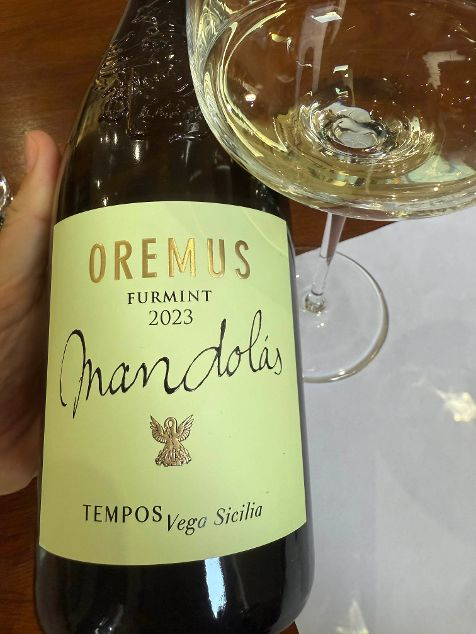
Il percorso si apre con Mandolás Furmint 2023, espressione secca del vitigno simbolo di Tokaj. Il Furmint mostra un profilo pulito e preciso, attraversato da una netta componente minerale e da una freschezza che ne sottolinea la naturale vocazione gastronomica. Non cerca effetti, procede per definizione e nitidezza. Il nome conduce quasi inevitabilmente alla Donna con mandolino (Fanny Tellier), dipinta da Pablo Picasso nel 1910, negli anni del cubismo analitico. Ma l’associazione non si ferma al mandolino. Picasso rinuncia alla rappresentazione naturalistica, scompone la figura in piani geometrici, sovrappone punti di vista differenti e poi restituisce allo spettatore una realtà che deve essere ricostruita attraverso lo sguardo. Qualcosa di analogo accade nel bicchiere. Il Furmint, vitigno che per secoli ha contribuito alla fama dei grandi vini dolci di Tokaj, viene osservato da un’altra prospettiva. Scomposto dalla propria immagine tradizionale e ricomposto in una forma secca, verticale, minerale e gastronomica. Non cambia la materia, cambia il modo di guardarla.
Con il Late Harvest 2023 il paesaggio muta. Il colore è un oro chiarissimo, quasi luminoso. La dolcezza rimane misurata, mai ridondante, mentre l’acidità attraversa il sorso e gli impedisce di perdere tensione. È un vino che racconta già la maturità dell’uva senza rinunciare alla freschezza. L’immagine che lo accompagna è La vigna rossa di Vincent van Gogh, dipinta ad Arles nel 1888. Non esiste qui una corrispondenza cromatica, l’oro delicato del vino è lontanissimo dai rossi incandescenti della tela. Il legame è altrove. Van Gogh rappresenta uomini e donne durante la vendemmia, immersi in una natura che sembra partecipare al loro lavoro. La vite cessa di essere soltanto paesaggio e diventa incontro tra terra, tempo e intervento umano. È lo stesso passaggio che rende possibile un Late Harvest. Attendere significa lasciare che la natura proceda, ma significa anche riconoscere il momento nel quale intervenire.
Poi arrivano gli Aszú e la degustazione cambia ancora dimensione. Con il Tokaji Aszú 3 Puttonyos 2018 emergono immediatamente ananas e arancia, ma ciò che convince maggiormente è l’equilibrio. La concentrazione aumenta senza appesantire il sorso; dolcezza e acidità sembrano conoscere esattamente lo spazio che possono occupare senza invadere quello dell’altra. Qui l’immagine diventa La colazione dei canottieri di Pierre-Auguste Renoir. Intorno alla tavola della Maison Fournaise non c’è solennità, ci sono bicchieri, conversazioni, luce, corpi, sguardi. Il piacere non ha ancora bisogno dell’ebbrezza. È convivialità, e forse proprio per questo il 3 Puttonyos trova qui la propria corrispondenza. Possiede ricchezza, ma conserva una leggerezza capace di invitare ancora al sorso.
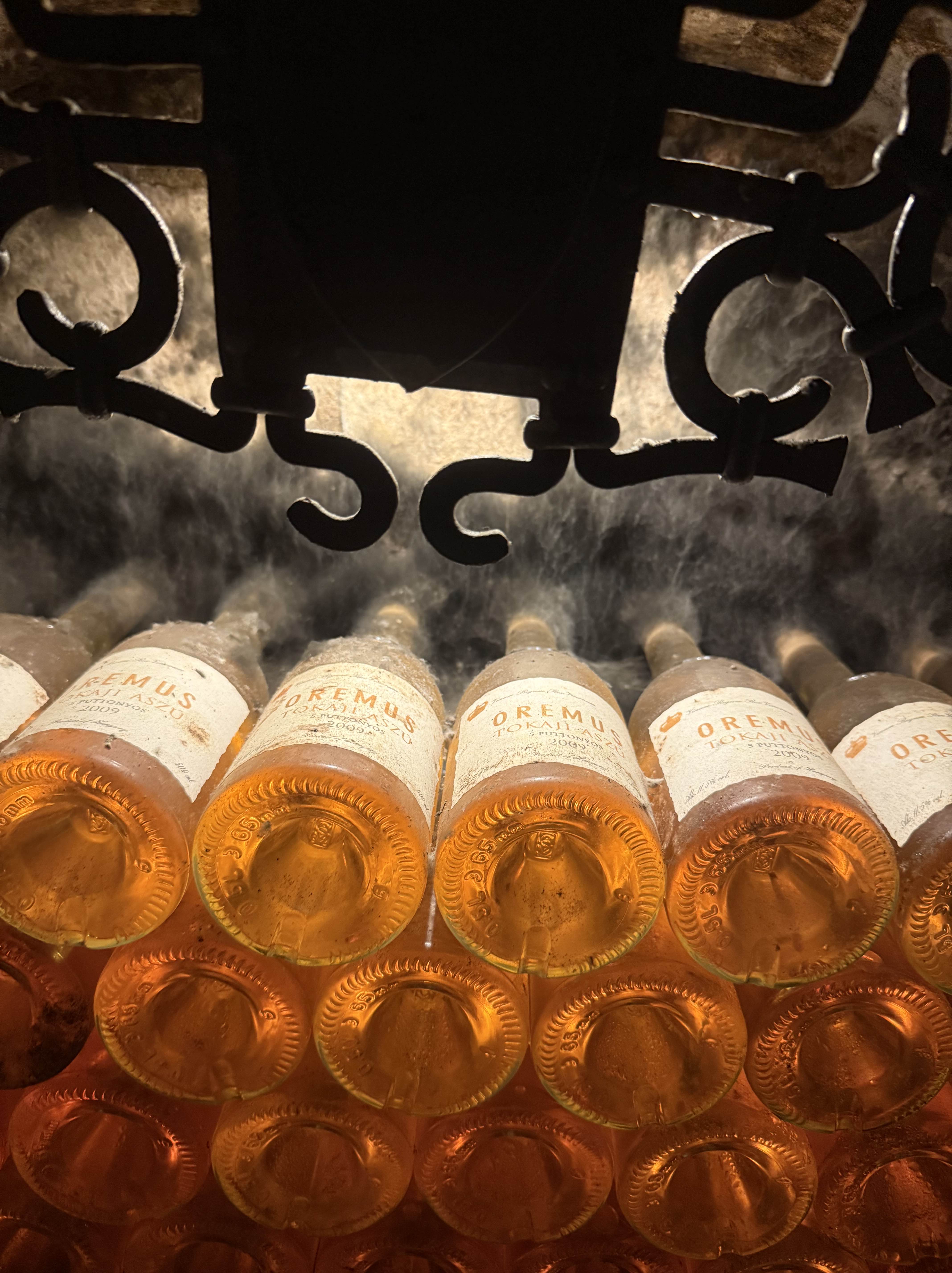
Con il Tokaji Aszú 5 Puttonyos 2017 il vino acquista maggiore profondità. Il profilo è fruttato e floreale, più ricco e avvolgente e anche il riferimento pittorico abbandona progressivamente la quotidianità. È il momento del Trionfo di Bacco di Diego Velázquez, conosciuto anche come Los borrachos. Bacco entra tra gli uomini e il vino diventa qualcosa di più della bevanda: concede una momentanea sospensione dalle fatiche dell’esistenza. Velázquez, tuttavia, non rappresenta un Olimpo distante. Il dio siede accanto a uomini reali, dai volti segnati e condivide con loro il piacere. Il divino e l’umano finiscono nello stesso spazio, proprio come nel bicchiere la complessità non cancella l’immediatezza del frutto.
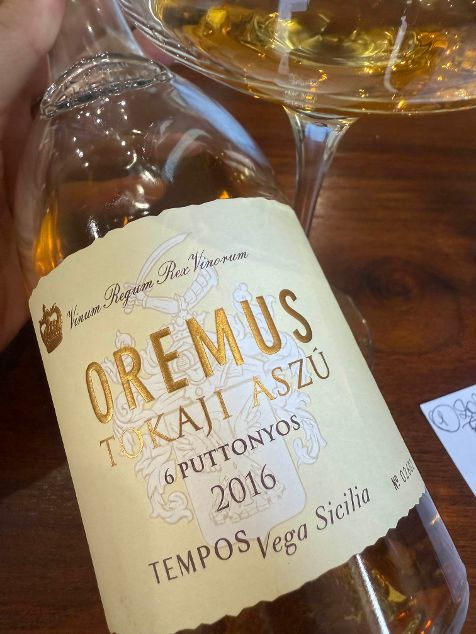
Il Tokaji Aszú 6 Puttonyos 2016 segna un ulteriore passaggio. È potente, opulento, dotato di una personalità netta. Qui il vino non accompagna più semplicemente la scena: sembra occuparla. Bacco ritorna, ma questa volta è quello dipinto da Caravaggio. Non un dio idealizzato, bensì una presenza fisica e sensuale. La frutta, il vino, la pelle, il calice offerto allo spettatore appartengono alla concretezza della materia. Caravaggio porta il mito dentro il corpo; il 6 Puttonyos porta la concentrazione dentro il sorso. Entrambi possiedono qualcosa che difficilmente consente l’indifferenza. Una personalità che chiede di essere guardata, o assaggiata, senza distrazioni.
Eszencia 2013? Il modo di bere cambia. La concentrazione è tale che l’Eszencia non appartiene più alla normale grammatica del vino. Se ne assaggiano quantità minime, tradizionalmente servite anche attraverso appositi cucchiaini. È intensa, densissima, estrema. Un’esperienza che richiede attenzione e un palato disposto a confrontarsi con qualcosa che non cerca l’immediatezza ma l’attesa del piacere e soprattutto la sua durata. Lo scrittore Gabriele D’Annunzio l’avrebbe certamente abbrezzata e consumata in speciali ed erotiche occasioni. Per accompagnarla non basta più Bacco. Serve Noè. Nell’ omonima Ebbrezza affrescata da Michelangelo sulla volta della Cappella Sistina, colui che dopo il Diluvio aveva piantato la vite e prodotto il vino finisce per oltrepassarne il limite. Beve, si ubriaca, rimane nudo e viene scoperto dai figli. È uno dei racconti più antichi e potenti dell’ambivalenza del vino: dono e piacere, ma anche perdita del controllo. Ed è proprio l’Eszencia, paradossalmente, a riportare tutto alla misura. Una concentrazione quasi estrema non invita a bere di più, ma obbliga a bere meno. Il piacere raggiunge il proprio limite e, invece di trasformarsi in eccesso, chiede disciplina.
I Greci avevano una parola precisa: métron, misura. Conoscevano altrettanto bene il suo contrario, la hýbris, la tracotanza di chi oltrepassa il limite assegnato all’uomo.
Dopo Picasso, Van Gogh, Renoir, Velázquez e Caravaggio, è dunque Michelangelo a chiudere idealmente la degustazione e forse anche a restituirne il significato. La grandezza non consiste nell’avere tutto, né nel potere tutto, ma nel conoscere la misura.
Una lezione che vale per il vino, probabilmente anche per chi costruisce un’impresa senza considerarsi mai definitivamente arrivato.
One often wonders why some companies manage to grow more than others. Sometimes we look at them with a touch of envy; more rarely do we have the humility to try to understand the reasons behind their success. Yet greatness is almost never a starting point. It is something that must be built.
The Greeks had already told us this through Heracles. The son of Zeus and Alcmene, driven mad by Hera, the hero commits the most terrible of crimes: he kills his wife Megara and his own children. To atone for his guilt, he must undertake the famous labours imposed upon him by Eurystheus. Twelve trials which, one after another, transform physical strength into a path of purification, ultimately leading to immortality. The myth seems to remind us that even for a son of Zeus, greatness is not simply granted. It must be earned.
The same is true in the life of a company: success rarely comes from a single act. It is built through choices, investments, mistakes, patience and, above all, the ability to imagine what does not yet exist.
When, in April 1982, the Álvarez family purchased Vega Sicilia from Venezuelan businessman Hans Neumann, they acquired one of the most prestigious wineries in Ribera del Duero. They could simply have chosen to preserve its legendary status. Instead, they chose to build upon it.
Pablo Álvarez, born in Bilbao in 1954 and a Law graduate, took over the general management of Vega Sicilia in 1986 and became its CEO in 1990. From then on, the family’s name gradually began to extend beyond the boundaries of the historic estate. In 1991, Alión was created, also in Ribera del Duero, but conceived with a more modern identity than the classicism of Vega Sicilia. In 1993, their vision crossed Spain’s borders and reached Hungary, where Tokaj-Oremus was established. Pintia, in the Toro appellation, followed in 2001. Then, in 2013, after twelve years of planning, came Macán, in Rioja, born from the collaboration between Benjamin de Rothschild and Vega Sicilia.
This was not, therefore, an indiscriminate multiplication of labels, but rather a carefully constructed progression, seeking out territories capable of expressing identities of their own. The company itself describes its development model as being based on the creation of new wineries in areas with sufficient potential for quality and differentiation.
Perhaps this is precisely where one of the reasons why some companies become great can be found. They do not simply replicate what has already worked; each time, they accept a new challenge.
And the challenge they faced in 1993 was anything but simple. Only three years after the end of the communist regime in Hungary, the Álvarez family arrived in Tokaj, a region with centuries of winemaking history, bringing modernisation and technology without seeking to erase what time had already created.
They chose Oremus.
A name which, to anyone familiar with Latin, seems to require no explanation: oremus, “let us pray”. And yet this is precisely where another story begins, one probably connected to a personal name, rather than to a verb.
Perhaps, however, the most interesting aspect of the Vega Sicilia story is not merely the Álvarez family’s ability to create new wine estates. It is the way in which they have succeeded in building and, above all, preserving human relationships.
At a time when work seems progressively to have lost its sense of continuity, something almost anachronistic happens at Vega Sicilia: many employees were born on the estate and inherited from their parents not only a profession, but a bond with the company. Some families have worked for Vega Sicilia for four generations. Parents have been able to leave their children something that today seems increasingly rare: not simply a job, but the opportunity to continue a story.
Perhaps this too is one of the reasons why some companies become great while others simply remain companies. Capital is not made up solely of vineyards, cellars, bottles and balance sheets. There is another kind of capital, far more difficult to build and impossible to buy: trust. The kind of trust that allows a professional relationship to endure over time and, in some cases, even across generations.
Continuity alone, however, can easily turn into inertia. The Álvarez family seems to have built its journey on the opposite principle: preserving what deserves to be preserved while constantly questioning what can still be improved.
Never believing that you have finally arrived.
Pablo Álvarez summed up this philosophy in a few words: “The best wine is still to be made.” It is not an exercise in false modesty, but almost a business method. If the best wine is still to come, every vintage becomes a new challenge and every achievement ceases to be a destination and becomes instead another starting point.
Perhaps, then, the initial reference to the Labours of Heracles takes on an additional meaning. It is not the number of feats accomplished that makes the hero great, but the need to face the next one. Greatness does not lie in having arrived, but in never considering oneself to have arrived once and for all.
Among their collaborators, Ferenc Zelenák stands out, with his striking eyes, quick wit, lively gaze, empathy and, above all, his profound knowledge of wine and the region. Today he is brand ambassador for Tokaj-Oremus, but his relationship with Tokaj long predates any professional position. He was born and raised here and belongs to a family whose roots in the region’s winemaking history stretch back more than three hundred years.
Wine comes almost as an inheritance from both sides of his family. His maternal great-grandparents were authorised to transport Tokaji Aszú. His grandfather, after returning from the concentration camps, founded an independent cooperative for winegrowers during the difficult years of the communist regime. His family history even intersects with one of the most fascinating chapters in the historiography of Tokaj: his uncle, the local historian István Zelenák, discovered among the Garai family documents a record dating from 1571 in which “Asszú Szőlő Bor” is mentioned, documentary evidence of the existence of Aszú before the famous tradition attributing its origin to Szepsi Laczkó Máté.
There is also a curious thread in Ferenc’s story that personally connects him to Oremus. Around twenty years ago, when he decided to move to London to build his professional career and deepen his knowledge of wine, he partly financed that decision by selling a vineyard parcel in the Teleki Grand Cru to Oremus/Vega Sicilia. In London he continued his wine education, including WSET studies. Years later, that apparently broken thread would bring him back to the very same place, this time as an ambassador for Tokaj-Oremus.
His story thus becomes a tangible expression of the ability to build lasting relationships that is one of Vega Sicilia’s distinguishing features. Some professional relationships do not arise simply from a contract: they are built on knowledge, trust and a sense of belonging that time eventually consolidates.
Perhaps this is also why listening to Ferenc means understanding Tokaj differently. He does not merely describe a territory he has studied; he tells the story of a territory he has lived, inherited and ultimately rediscovered. And when technical knowledge meets family memory, even a tasting ceases to be merely a succession of glasses and becomes a story.
It is precisely through Ferenc that history gradually makes its way into the glass. The tasting thus becomes another way of travelling through Tokaj and, almost naturally, calls upon a different language, yet one equally capable of interpreting reality: the language of art. For a wine, like a painting, is never exhausted by what it reveals at first glance. It requires time, attention and, sometimes, a willingness to change perspective.
The journey begins with Mandolás Furmint 2023, a dry expression of Tokaj’s emblematic grape variety. The Furmint reveals a clean, precise profile, marked by a distinct mineral character and a freshness that emphasises its natural gastronomic versatility. It does not seek dramatic effects; it is defined instead by precision and clarity.
Its name leads almost inevitably to Woman with a Mandolin (Fanny Tellier), painted by Pablo Picasso in 1910, during the period of Analytical Cubism. Yet the association goes far beyond the mandolin itself. Picasso abandons naturalistic representation, breaks the figure down into geometric planes, superimposes different points of view and then presents the viewer with a reality that must be reconstructed through the act of looking.
Something similar happens in the glass. Furmint, the grape that for centuries contributed to the fame of Tokaj’s great sweet wines, is viewed from another perspective: disassembled from its traditional image and reconstructed in a dry, vertical, mineral and gastronomic form. The substance does not change; what changes is the way we look at it.
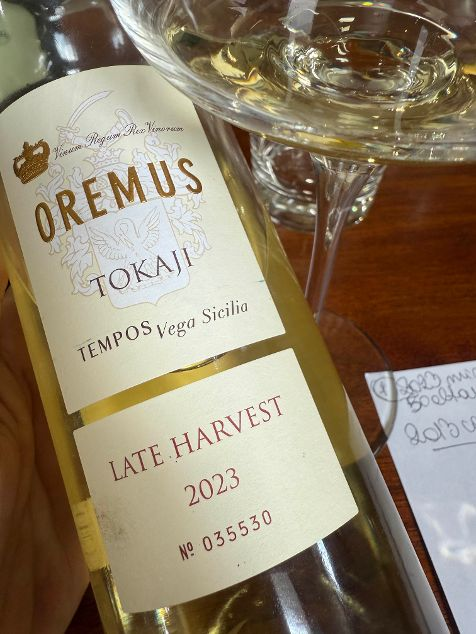
With the Late Harvest 2023, the landscape changes. The colour is an extremely pale, almost luminous gold. The sweetness remains measured, never excessive, while acidity runs through the palate, preventing the wine from losing tension. It is a wine that already expresses the ripeness of the grapes without sacrificing freshness.
The image accompanying it is Vincent van Gogh’s The Red Vineyard, painted in Arles in 1888. There is no chromatic correspondence here: the wine’s delicate gold could hardly be further removed from the incandescent reds of the canvas. The connection lies elsewhere. Van Gogh depicts men and women during the harvest, immersed in a natural world that seems itself to participate in their labour. The vine ceases to be merely part of the landscape and becomes a meeting point between earth, time and human intervention. The same transition makes a Late Harvest possible. Waiting means allowing nature to continue its course, but it also means recognising the precise moment at which to intervene.
Then come the Aszú wines, and the tasting enters another dimension.
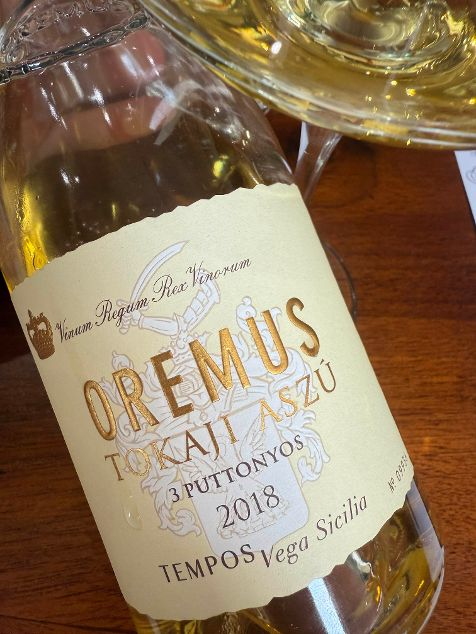
With the Tokaji Aszú 3 Puttonyos 2018, pineapple and orange immediately emerge, but what is most striking is its balance. Concentration increases without weighing down the palate; sweetness and acidity seem to know exactly how much space each may occupy without encroaching upon the other.
Here the image becomes Pierre-Auguste Renoir’s Luncheon of the Boating Party. Around the table at the Maison Fournaise there is no solemnity: there are glasses, conversations, light, bodies and glances. Pleasure has not yet become intoxication. It is conviviality, and perhaps this is precisely why the 3 Puttonyos finds its counterpart here. It possesses richness, yet retains a lightness that invites another sip.
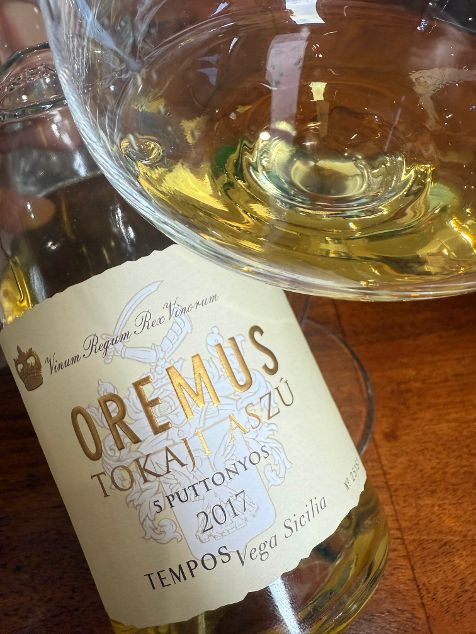
With the Tokaji Aszú 5 Puttonyos 2017, the wine acquires greater depth. Its profile is fruity and floral, richer and more enveloping, while the artistic reference gradually leaves everyday life behind.
This is the moment for Diego Velázquez’s The Triumph of Bacchus, also known as Los Borrachos. Bacchus enters the world of men and wine becomes something more than a drink: it offers a momentary respite from the hardships of existence. Yet Velázquez does not depict a distant Olympus. The god sits beside real men, their faces marked by life, and shares pleasure with them. The divine and the human end up occupying the same space, just as in the glass complexity does not erase the immediacy of the fruit.
The Tokaji Aszú 6 Puttonyos 2016 marks a further step. It is powerful, opulent and endowed with a distinctive personality. Here the wine no longer merely accompanies the scene: it seems to take possession of it.
Bacchus returns, but this time it is Caravaggio’s Bacchus. Not an idealised god, but a physical, sensual presence. The fruit, the wine, the skin and the glass offered to the viewer all belong to the tangible reality of matter. Caravaggio brings myth into the body; the 6 Puttonyos brings concentration into the palate. Both possess something that makes indifference almost impossible: a personality that demands to be observed, or tasted, without distraction.
And Eszencia 2013? Even the way of drinking changes.
Its concentration is such that Eszencia no longer belongs to the ordinary grammar of wine. It is tasted in minute quantities, traditionally served even with special spoons. It is intense, extraordinarily dense, extreme. An experience that requires attention and a palate willing to encounter something that does not seek immediacy, but rather the anticipation of pleasure and, above all, its persistence.
The writer Gabriele D’Annunzio would surely have appreciated it, reserving it perhaps for particularly refined and erotic occasions.
Bacchus is no longer enough to accompany it. We need Noah.
In Michelangelo’s The Drunkenness of Noah, frescoed on the ceiling of the Sistine Chapel, the man who planted the vine and made wine after the Flood ultimately crosses its boundary. He drinks, becomes intoxicated, lies naked and is discovered by his sons. It is one of the oldest and most powerful representations of wine’s ambivalence: gift and pleasure, but also loss of control.
Paradoxically, it is precisely Eszencia that brings everything back to measure. Such extreme concentration does not invite us to drink more; it compels us to drink less. Pleasure reaches its boundary and, rather than turning into excess, demands discipline.
The Greeks had a precise word for this: métron, measure. And they knew its opposite equally well: hýbris, the arrogance of those who overstep the limits assigned to humankind.
After Picasso, Van Gogh, Renoir, Velázquez and Caravaggio, it is therefore Michelangelo who ideally brings the tasting to a close and perhaps also reveals its meaning. Greatness does not consist in having everything, nor in being able to do everything, but in knowing the measure.
A lesson that applies to wine and, perhaps, also to those who build a company without ever considering themselves to have definitively arrived.