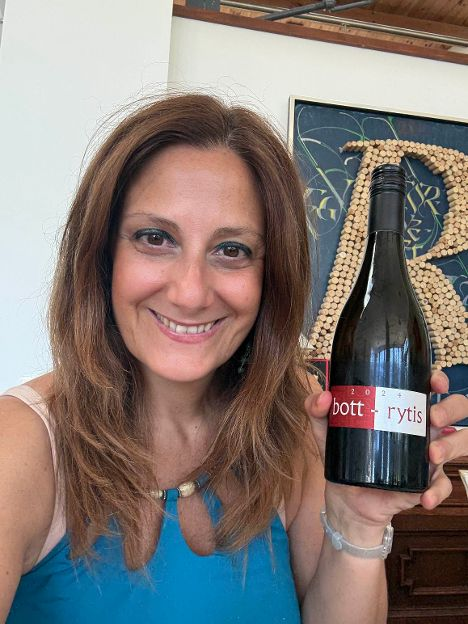
Bott Pince: quando il vino diventa solidarietà femminile

Mentre nell’antica Grecia, durante il symposion, gli uomini si abbeveravano del nettare di Dioniso versandolo nella κύλιξ (kylix), coppa larga, poco profonda e dotata di due anse orizzontali, il vino diventava strumento di comunicazione, condivisione e, in qualche misura, anche simbolo di solidarietà maschile. La donna, salvo figure estranee al modello della cittadina rispettabile, rimaneva sostanzialmente esclusa da quel rito collettivo.
Secoli dopo, nel 2011, tre donne del Tokaj decidono quasi di capovolgere quella consuetudine antica. Berecz Stéphanie, della cantina Kikelet, Bárdos Sarolta, di Tokaj Nobilis, e Bodó Judit, di Bott Pince, danno vita a un progetto interamente femminile: Három Grácia, le Tre Grazie. Un vino nato dall’assemblaggio delle loro diverse realtà, ma anche dall’idea che condividere non significhi rinunciare alla propria identità, bensì metterla in relazione con quella delle altre.
Anche l’etichetta, decisamente moderna, sembra raccontarlo attraverso tre paia di scarpe. Stéphanie indossa calzature verdi, colore dell’armonia, della speranza e del rinnovamento; Sarolta stivaletti dorati, evocazione della luce e dell’ottimismo; Judit scarpe rosse, metafora di vitalità, passione e amore. Tre donne differenti, tre cantine, tre sensibilità che ogni anno tornano a incontrarsi nel medesimo calice.
È forse una delle immagini più contemporanee della parità: non diventare uguali, ma avere la stessa libertà di essere differenti.
Sebbene Judit produca numerose etichette, Három Grácia sembra rappresentare particolarmente bene la sua personalità. Quando si giunge a Bott Pince si avvertono immediatamente la sua energia positiva, il sorriso e la grinta. È l’intelligenza vivace di una donna nata nel Felvidék, l’antica Alta Ungheria oggi appartenente alla Slovacchia, dove studia agraria e incontra József Bodó, allora studente di storia dell’arte, destinato a diventare suo marito. Nel 2000 arriva a Tokaj e József la segue. Non hanno ancora un progetto preciso, saranno il territorio e il tempo a indicare progressivamente la strada.
La loro storia diventa così anche una storia familiare. Costruiscono insieme un’azienda e crescono tre figli, ai quali Judit concede intelligentemente la libertà di scegliere il proprio percorso. Ma soprattutto maturano un’idea del vino che va ben oltre la produzione. Bott Pince dichiara infatti di voler coltivare vigneti, produrre vino e costruire comunità, considerando il vino stesso uno strumento per raggiungere questo obiettivo. È probabilmente questa parola, comunità, a fornire una delle chiavi migliori per comprendere Judit e, forse, anche Három Grácia.
La stessa filosofia si traduce nelle scelte agronomiche ed enologiche. Nei vigneti Bott non vengono impiegati prodotti chimici e le fermentazioni sono spontanee, condotte in botti di rovere. L’obiettivo dichiarato è perseguire la qualità rispettando la natura e, nello stesso tempo, raccogliere attorno alla cantina persone accomunate da valori simili, capaci di lavorare insieme per il futuro di una regione vinicola dalla storia plurisecolare.
Anche il luogo nel quale questa filosofia prende forma sembra custodire il medesimo principio di continuità. A Bodrogkeresztúr, Bott Pince occupa infatti parte di un’antica manifattura di ceramica. Nel 1930 la famiglia Ullrich, proveniente da Herend, acquistò qui un edificio in pietra vecchio di oltre tre secoli e avviò una produzione che dagli oggetti ornamentali passò alle componenti per stufe in maiolica e quindi alla ceramica industriale. Negli anni Settanta la fabbrica dava lavoro a più di trecento persone. Dopo la fine del regime comunista cessò l’attività e rimase abbandonata per quasi trent’anni, finché Judit e József, ormai costretti ad ampliare la loro piccola cantina di Tokaj, decisero di recuperare quegli edifici e restituire loro una funzione.
Non è difficile cogliere una continuità quasi simbolica: prima la terra diventava ceramica, oggi diventa vino. Cambia la materia finale, non il rapporto con il luogo, con le mani dell’uomo e con il tempo.
Ed è proprio la terra a diventare protagonista quando si passa ai vigneti. Bott Pince lavora parcelle differenti del Tokaj, tra cui Teleki, Előhegy, Határi, Kulcsár e Csontos, cercando di conservarne nel bicchiere le rispettive identità. Kulcsár si trova ai piedi di un antico vulcano, su terreni fortemente pietrosi nei quali la riolite lascia un’impronta riconoscibile; Csontos presenta invece un ricco suolo forestale bruno attraversato da formazioni di riolite.
Ed è nel calice che quelle differenze, apparentemente affidate alla geologia, smettono di essere teoria e diventano percezione.
Minőséget érzi è una bollicina agile e immediata, con appena 11,5% vol., nella quale emergono sentori di frutta ancora acerba accompagnati da una spiccata acidità. È proprio la freschezza, sostenuta dall’effervescenza, a scandire il sorso e a conferirgli una notevole capacità di ripulire il palato. Una caratteristica che permette di immaginarlo non soltanto come aperitivo, ma anche accanto a preparazioni più strutturate, persino a una carne servita al sangue, dove la bollicina e la componente acida possono contrastarne efficacemente la succulenza.
Con Kulcsár Hárslevelű 2024 il registro cambia decisamente. L’acidità diventa protagonista e il frutto sembra quasi arretrare per lasciare spazio al carattere del luogo. Il vigneto poggia su terreni nei quali la componente vulcanica e i frammenti di tufo riolitico contribuiscono a delineare un vino teso, verticale, tutt’altro che accomodante. Non cerca di conquistare attraverso la morbidezza: domanda piuttosto attenzione, tempo e un palato capace di apprezzarne il rigore.
Una personalità differente emerge nel Csontos Furmint 2023. Il frutto giallo appare più maturo, il sorso più morbido e disteso, la beva più immediata. Il confronto tra i due vini diventa così quasi una piccola lezione sul significato dei dűlő: non un’indicazione geografica da leggere sull’etichetta, ma la possibilità di riconoscere nel bicchiere identità differenti. Se Kulcsár procede per tensione e verticalità, Csontos sembra concedersi con maggiore facilità, pur conservando quella freschezza che costituisce uno dei tratti distintivi dei vini di Tokaj.
Il percorso prosegue verso la dolcezza con Tokaji Szamorodni Éden 2023. Qui il vino cambia passo. Il frutto è più maturo e avvolgente, richiamando l’albicocca e la frutta gialla, cui si accompagnano sfumature di miele e scorza d’agrume. La dolcezza non rimane però isolata, perché trova nella freschezza il contrappunto necessario a conservare dinamismo e piacevolezza.
Già il nome Bott-rytis 2024 suggerisce un evidente gioco di parole tra Bott e Botrytis. Nel bicchiere la mela cotogna incontra il miele millefiori, mentre emergono progressivamente fiori gialli e una nitida sensazione di caramella al limone. Anche in questo caso è l’acidità a impedire alla componente dolce di diventare predominante: attraversa il sorso e gli restituisce slancio, lasciando che ricchezza e freschezza procedano insieme.
La degustazione trova infine la propria espressione più solenne nel Tokaji Aszú 6 Puttonyos 2023, da Furmint. La dolcezza è importante, ma carezzevole, mai aggressiva. Il profilo aromatico si apre verso suggestioni esotiche di mango, cui seguono zenzero caramellato, camomilla e delicate reminiscenze di tisane ed erbe essiccate. Nel bicchiere gli archetti scendono lentamente lungo le pareti, sinuosi e seducenti, quasi anticipando visivamente la densità del sorso. È un vino ricco, ma non statico. Ancora una volta la freschezza interviene a sostenere la materia e a dare continuità alla beva.
Il pensiero ritorna inevitabilmente all’inizio e a quelle tre paia di scarpe: verdi, dorate e rosse. Nell’antica Grecia il symposion affidava al vino il compito di rinsaldare una comunità dalla quale le donne erano sostanzialmente escluse; più di duemila anni dopo, a Tokaj, tre donne hanno scelto lo stesso vino per costruire una comunità fondata sulla condivisione.
Forse è proprio questa la lezione più autentica di Három Grácia: nessuna delle tre deve rinunciare alla propria identità perché insieme possano creare qualcosa di diverso. Come accade nell’assemblaggio, ogni voce rimane riconoscibile, ma acquista forza nell’incontro con le altre.
Perché quando le donne scelgono di sostenersi, non hanno bisogno di bere dallo stesso calice: possono essere loro a riempirlo.

Bott Pince: When Wine Becomes Female Solidarity
In ancient Greece, during the symposion, men drank the nectar of Dionysus from the κύλιξ (kylix), a broad, shallow cup with two horizontal handles. Wine became a means of communication and sharing and, to some extent, a symbol of male solidarity. Women, apart from figures who stood outside the conventional model of the respectable female citizen, were largely excluded from this collective ritual.
Centuries later, in 2011, three women from Tokaj decided, almost as if to overturn that ancient custom, to create an entirely female project. Stéphanie Berecz, of Kikelet Winery, Sarolta Bárdos, of Tokaj Nobilis, and Judit Bodó, of Bott Pince, brought Három Grácia — the Three Graces — to life. It is a wine born from blending the expressions of their different estates, but also from the belief that sharing does not mean relinquishing one’s identity; rather, it means bringing it into dialogue with that of others.
The distinctly modern label seems to tell the same story through three pairs of shoes. Stéphanie wears green shoes, the colour of harmony, hope and renewal; Sarolta wears golden ankle boots, evoking light and optimism; Judit wears red shoes, a metaphor for vitality, passion and love. Three different women, three wineries, three sensibilities that come together year after year in the same glass.
It is perhaps one of the most contemporary images of equality: not becoming the same, but having the same freedom to be different.
Although Judit produces numerous labels, Három Grácia seems to embody her personality particularly well. Upon arriving at Bott Pince, one immediately senses her positive energy, her smile and her determination. Hers is the lively intelligence of a woman born in Felvidék, the historic Upper Hungary, now part of Slovakia, where she studied agriculture and met József Bodó, then an art history student and the man who would become her husband. In 2000 she arrived in Tokaj, and József followed her. At the time, they had no clearly defined project: the land and time itself would gradually show them the way.
Their story thus became a family story as well. Together they built a winery and raised three children, to whom Judit wisely gave the freedom to choose their own paths. Above all, however, they developed an idea of wine that extends far beyond production. Bott Pince speaks of cultivating vineyards, making wine and building community, regarding wine itself as a means of achieving that goal. It is probably this word — community — that provides one of the most revealing keys to understanding Judit and, perhaps, Három Grácia itself.
The same philosophy is reflected in their viticultural and winemaking choices. No chemicals are used in Bott’s vineyards, while fermentation occurs spontaneously in oak barrels. Their stated aim is to pursue quality while respecting nature and, at the same time, to bring together around the winery people who share similar values and are willing to work collectively for the future of a wine region with a centuries-old history.
Even the place where this philosophy takes shape seems to embody the same principle of continuity. In Bodrogkeresztúr, Bott Pince occupies part of a former ceramics factory. In 1930, the Ullrich family, originally from Herend, purchased a stone building more than three centuries old and established a business that evolved from decorative objects to components for tiled stoves and, eventually, industrial ceramics. By the 1970s, the factory employed more than three hundred people. After the end of the communist era, production ceased and the complex remained abandoned for almost thirty years, until Judit and József, needing more space than their small Tokaj cellar could provide, decided to restore the buildings and give them a new purpose.
It is not difficult to perceive an almost symbolic continuity: once, the earth became ceramics; today, it becomes wine. The final material changes, but not the relationship with the place, with human hands and with time.
And it is precisely the earth that takes centre stage when attention turns to the vineyards. Bott Pince works with different parcels across Tokaj, including Teleki, Előhegy, Határi, Kulcsár and Csontos, seeking to preserve each one’s individual identity in the glass. Kulcsár lies at the foot of an ancient volcano, on extremely stony soils where rhyolite leaves a recognisable imprint; Csontos, by contrast, features rich brown forest soils interspersed with rhyolite formations.
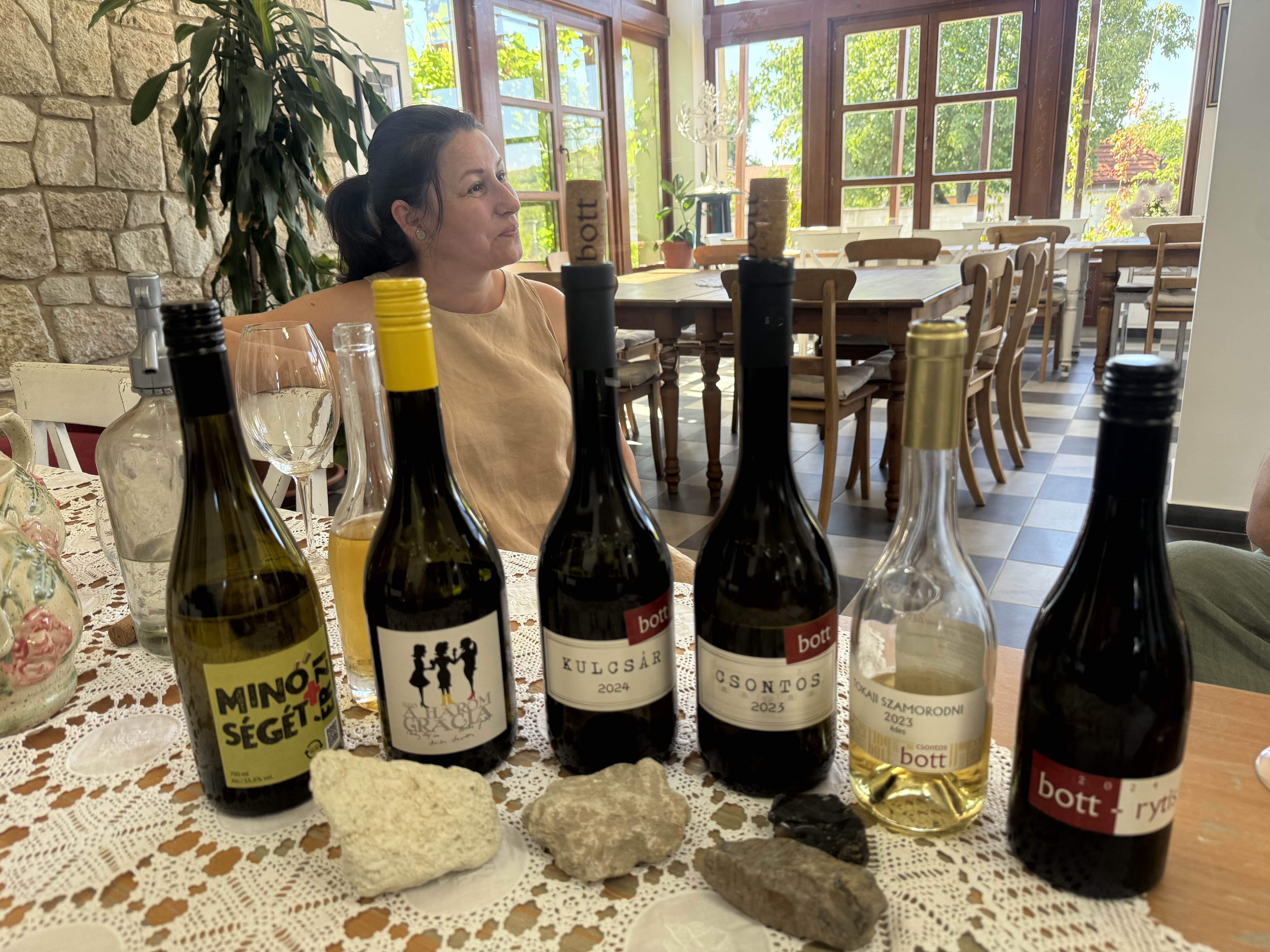
It is in the glass that these differences, seemingly entrusted to geology, cease to be theory and become perception.
Minőséget érzi is a lively, approachable sparkling wine with just 11.5% alcohol by volume. Aromas of slightly underripe fruit emerge alongside pronounced acidity. It is precisely this freshness, supported by the effervescence, that shapes the palate and gives the wine a remarkable ability to cleanse it. This quality makes it easy to imagine not only as an aperitif but also alongside more structured dishes, even rare meat, where the bubbles and acidity can effectively counterbalance its succulence.
With Kulcsár Hárslevelű 2024, the register changes decisively. Acidity takes centre stage, while the fruit almost seems to step back, allowing the character of the site to emerge. The vineyard lies on soils where volcanic elements and fragments of rhyolitic tuff help define a taut, vertical wine that is anything but accommodating. It does not seek to seduce through softness; instead, it demands attention, time and a palate capable of appreciating its rigour.
A different personality emerges in Csontos Furmint 2023. The yellow fruit appears riper, the palate softer and more relaxed, the wine more immediately approachable. Comparing these two wines becomes almost a small lesson in the meaning of the dűlő: not merely a geographical indication printed on a label, but an opportunity to recognise distinct identities in the glass. If Kulcsár speaks through tension and verticality, Csontos reveals itself more readily, while retaining the freshness that remains one of the defining characteristics of Tokaj wines.
The tasting then moves towards sweetness with Tokaji Szamorodni Éden 2023. Here the wine changes pace. The fruit becomes riper and more enveloping, recalling apricot and ripe yellow fruit, accompanied by nuances of honey and citrus peel. Yet sweetness never stands alone, as freshness provides the necessary counterpoint, preserving both dynamism and pleasure on the palate.
The very name Bott-rytis 2024 suggests an evident play on words between Bott and Botrytis. In the glass, quince meets wildflower honey, while yellow flowers gradually emerge alongside a distinctive note of lemon candy. Once again, acidity prevents sweetness from becoming dominant: it runs through the palate, restoring momentum and allowing richness and freshness to proceed hand in hand.
The tasting finally reaches its most solemn expression with Tokaji Aszú 6 Puttonyos 2023, made from Furmint. The sweetness is pronounced yet caressing, never aggressive. The aromatic profile opens onto exotic notes of mango, followed by candied ginger, chamomile and delicate suggestions of herbal infusions and dried herbs. In the glass, the wine’s legs descend slowly along its sides, sinuous and seductive, almost visually anticipating the density of the palate. It is a rich wine, but never static. Once again, freshness supports its substance and gives continuity to the drinking experience.
Inevitably, our thoughts return to where the story began, and to those three pairs of shoes: green, gold and red. In ancient Greece, the symposion entrusted wine with the task of strengthening a community from which women were largely excluded; more than two thousand years later, in Tokaj, three women have chosen wine itself as a means of building a community founded on sharing.
Perhaps this is the most authentic lesson of Három Grácia: none of the three needs to relinquish her own identity for them to create something different together. As in a blend, every voice remains recognisable, yet grows stronger through its encounter with the others.
Because when women choose to support one another, they do not need to drink from the same cup: they can be the ones who fill it.