Emerencia Selection: il talento di continuare
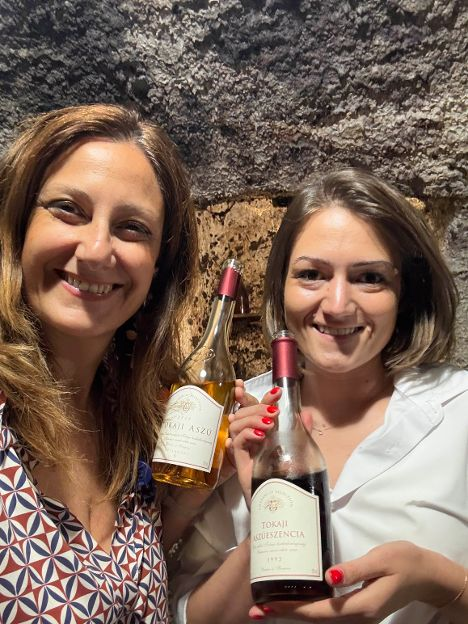
Essere figlie di donne di talento non è necessariamente un semplice privilegio. La storia dello spettacolo ne ha offerto esempi celebri come Judy Garland e Liza Minnelli, Debbie Reynolds e Carrie Fisher, Goldie Hawn e Kate Hudson, Blythe Danner e Gwyneth Paltrow. Talvolta l’eredità diventa un trampolino, altre volte un termine di paragone ingombrante. Più raramente madre e figlia riescono a stare nello stesso spazio senza che il talento dell’una chieda all’altra di arretrare.
A Olaszliszka, nel cuore del Tokaj, quello spazio è una cantina.
Hermann Emerencia ha cominciato a costruire la propria attività nei primi anni Novanta, quando l’Ungheria del vino stava ridisegnando il proprio futuro. Sua figlia Laura Varga ha scelto di restare accanto a lei, ma non semplicemente per raccoglierne l’eredità. Alla pratica appresa in famiglia ha affiancato studi universitari e ricerca, fino a intraprendere un percorso di dottorato.
Eppure, incontrandola, sono altre due qualità a colpire prima dei titoli: il talento e, soprattutto, l’umiltà.
Forse è proprio qui che una storia di successione smette di essere una storia di eredità. Perché continuare ciò che una madre ha costruito non significa necessariamente camminare sulle sue orme. Può significare imparare a lasciare, accanto alle sue, le proprie.
Laura Varga non ha semplicemente ereditato un’azienda. Ha scelto di studiare ciò che fin da bambina aveva visto fare.
Il suo percorso accademico racconta una formazione costruita con metodo. Nel 2017 consegue la laurea in Viticoltura ed Enologia alla Szent István University e nel 2019 completa la formazione magistrale in Ingegneria orticola. Prosegue, quindi, nell’ambito della ricerca, con un percorso di dottorato ancora in corso, e oggi affianca al lavoro nella cantina di famiglia l’attività presso il Dipartimento di Viticoltura ed Enologia della Tokaj-Hegyalja University, dove insegna anche le basi biologiche della viticoltura.
La ricerca non l’ha allontanata dalla vigna, anzi sembra averla ricondotta ancora più profondamente alle proprie radici. Tra i suoi interessi scientifici c’è il Furmint, vitigno identitario di Tokaj, studiato anche attraverso ricerche dedicate ai cloni e alla loro risposta allo stress idrico. Conoscenza accademica ed esperienza quotidiana finiscono così per incontrarsi nello stesso luogo: il vigneto.
La scelta, tuttavia, sembra essere maturata molto prima dell’università. Da bambina Laura partecipava alla vendemmia insieme alla sorella Aliz con un piccolo puttony costruito a misura di bambina. Già negli anni della scuola aveva deciso che il vino sarebbe diventato il suo mestiere e aveva orientato gli studi verso biologia e chimica, spinta dal desiderio di comprendere come un grappolo d’uva potesse trasformarsi in vino.
Oggi Laura appartiene a una generazione di produttori per i quali tradizione e conoscenza scientifica non sono termini contrapposti. Lavora e cresce nell’azienda costruita dalla madre Hermann Emerencia, ma porta con sé gli strumenti della ricerca e dell’insegnamento universitario.
Ed è forse qui che il rapporto tra madre e figlia acquista il suo significato più interessante: ereditare non significa ricevere qualcosa di già compiuto, ma assumersi la responsabilità di farlo evolvere.
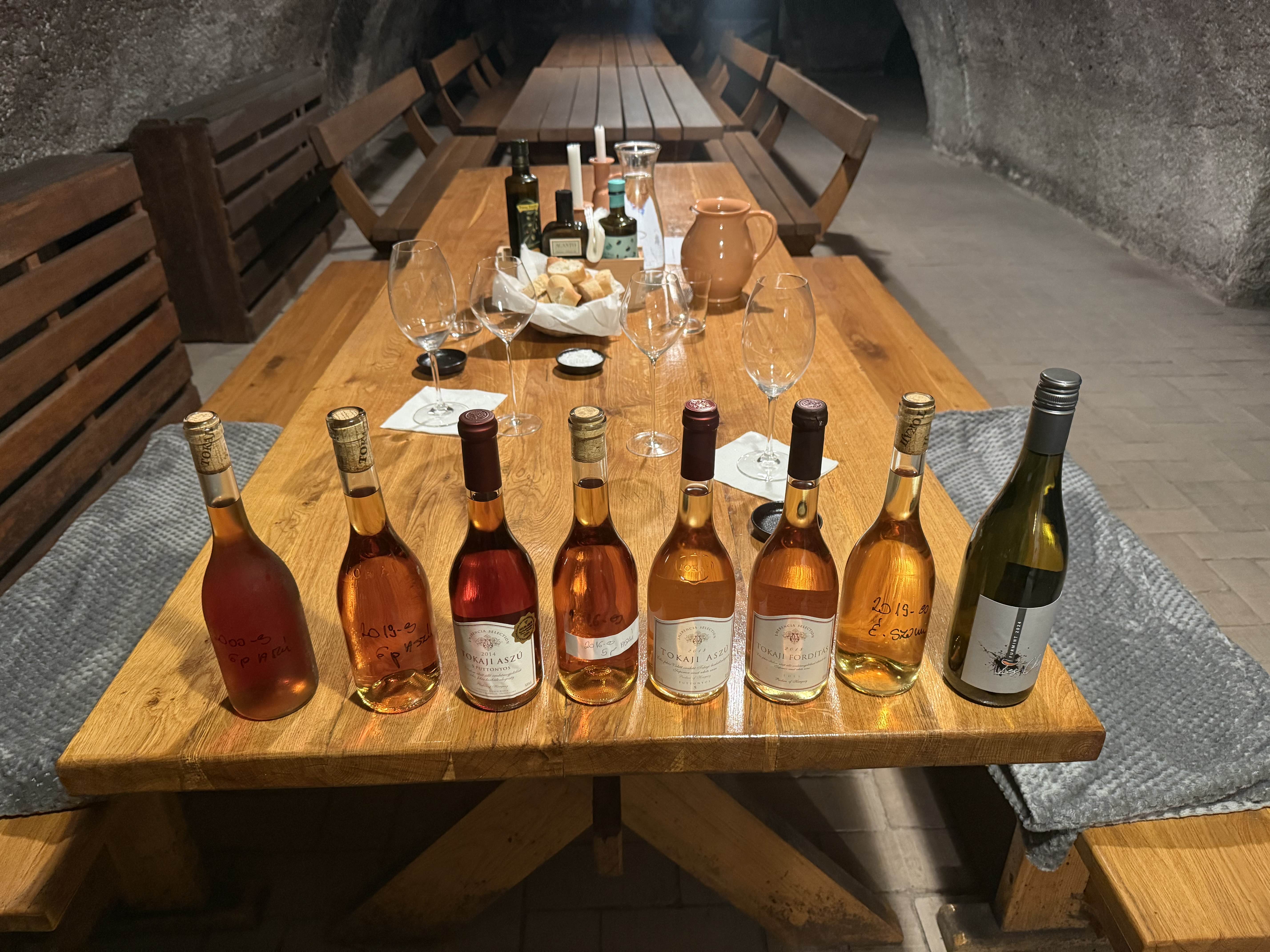
La degustazione permette di seguire non soltanto l’evoluzione dei vini di Emerencia Selection, ma anche quella della famiglia e del suo modo di interpretare Tokaj.
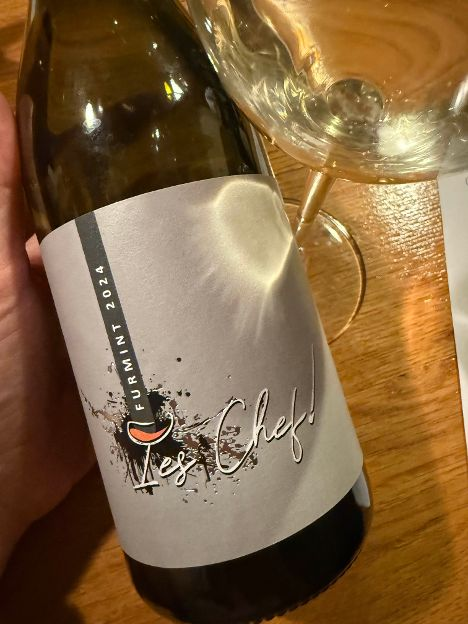
Ad aprire il percorso è il Tokaji Furmint 2024, un vino secco, abbinabile al cibo. Il profilo aromatico si muove sulla frutta gialla, accompagnata da un nitido richiamo alla caramella al limone. Il sorso è diretto e costituisce un’apertura netta, quasi una dichiarazione d’intenti prima di entrare nel territorio della dolcezza e della botrite.
Con il Tokaji Édes Szamorodni 2019 cambia il registro. L’albicocca incontra una delicata nota di zenzero, ma a sorprendere è soprattutto la facilità della beva. La dolcezza non appesantisce il sorso, sostenuto da quella freschezza che rappresenta uno dei tratti distintivi dei grandi vini dolci di Tokaj.
Il Tokaji Fordítás 2018 introduce invece una delle tipologie più particolari della tradizione locale. Il Fordítás nasce dal riutilizzo della massa di acini Aszú già pressata, sottoposta a una nuova macerazione con mosto o vino della stessa annata. Un’antica pratica capace di estrarre ciò che le bacche hanno ancora da offrire. Il 2018 di Emerencia presenta 148,3 g/l di zucchero residuo, 7,9 g/l di acidità e 11% vol. Nel calice appare ambra chiara, con richiami di noci e pinoli che evocano curiosamente una dimensione mediterranea, quasi un ponte sensoriale tra Tokaj e paesaggi molto più meridionali.
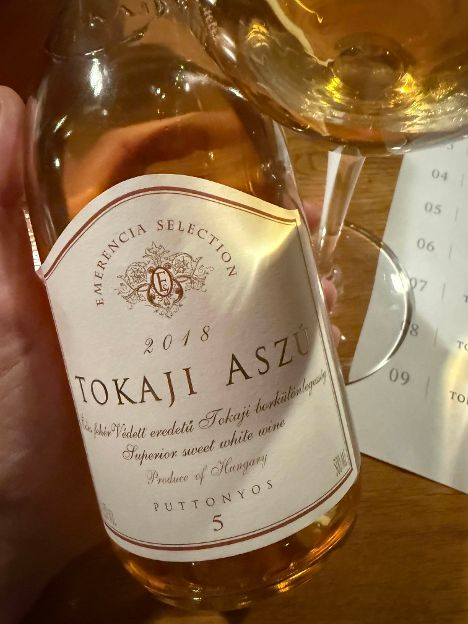
Si entra poi nel mondo dell’Aszú con il Tokaji Aszú 5 Puttonyos 2018. Gli aromi diventano più marcati e la personalità appare più decisa, quasi mascolina. Ma è Laura a offrire la chiave di lettura più interessante. Questo vino rappresenta, nelle sue parole, l’unione fra il vecchio e il nuovo stile. Una definizione che supera la semplice degustazione e diventa una dichiarazione della filosofia aziendale: conservare l’identità di Tokaj senza trasformare la tradizione in immobilità.
Il confronto con il Tokaji Aszú 5 Puttonyos 2016 rende immediatamente percepibile l’effetto dell’evoluzione. Il colore si fa più scuro e il quadro olfattivo vira verso caramello e caramella mou, attraversati da una lieve nota di cherosene. Due soli anni separano le vendemmie 2016 e 2018, ma nel bicchiere la distanza appare più evidente.
Con il Tokaji Aszú 5 Puttonyos 2014 il vino diventa ancora più scuro e denso. Emergono arancia caramellata, mandorla e scorze candite. I dati analitici, 159,3 g/l di zucchero, 9,42 g/l di acidità e 9,5% vol., raccontano una concentrazione importante, sorretta però da un’acidità altrettanto significativa. Ma il 2014, nella storia di Emerencia, non è soltanto un’annata. È l’anno in cui Hermann Emerencia coinvolge concretamente Laura nel lavoro della cantina. La sequenza dei vini è così anche successione generazionale. Proprio mentre l’Aszú racconta il tempo, nella famiglia comincia un nuovo capitolo.
Il Tokaji Aszú 6 Puttonyos 2019 manifesta una nuova estensione. Il naso è inusuale, estroverso senza essere prevedibile. Confetti e frutti rossi conducono verso suggestioni che richiamano quasi la Sicilia, sorprendentemente lontane dall’immaginario aromatico che ci si potrebbe aspettare a Tokaj. Il sorso, al contrario dell’esuberanza olfattiva, si distende con morbidezza. È un vino che sembra scegliere una propria strada espressiva, senza rinunciare all’identità dell’Aszú.
Il salto temporale diventa considerevole con il Tokaji Aszú 6 Puttonyos 2000. Il colore è più scuro, la consistenza aumenta e anche la dolcezza appare più pronunciata, fino a suggerire una sensazione quasi liquorosa. Il profilo aromatico si sposta verso ciliegie sotto spirito, foglie di tabacco e cachi, mentre la densità del sorso testimonia l’effetto di una lunga evoluzione. Il confronto diretto con il 2019 permette di osservare nel bicchiere ciò che quasi vent’anni possono fare a un grande Aszú. Il frutto cambia forma, le note fresche cedono progressivamente spazio a quelle terziarie e il vino acquista profondità.
Il percorso trova, infine, il proprio vertice nel Tokaji Aszúeszencia 1993. Non è soltanto il vino più antico della degustazione. È la prima annata della madre di Laura e assume quindi un significato che va ben oltre il suo valore enologico. L’Aszúeszencia appartiene inoltre alla storia di Tokaj, una categoria distinta dall’Eszencia e oggi non più utilizzata nella moderna classificazione del Tokaji Aszú.
Il colore è il più scuro dell’intera sequenza, un’ambra profonda segnata dal tempo. Al naso affiorano sbuffi di caffè e orzo, assiene a sentori di frutta secca e di frutta a polpa gialla, che riescono ad incontrarsi senza che l’una cancelli l’altra. Eppure ciò che sorprende maggiormente, dopo oltre trent’anni, è come l’acidità riesca a mantenere vivo il sorso, opponendo freschezza a concentrazione e dolcezza. Un vino di questa complessità potrebbe trovare nel cioccolato fondente al 70% un compagno capace di sostenerne intensità e persistenza.
Dinanzi a questo Aszúeszencia del 1993 appare un dipinto temporale. Nel calice c’è la prima vendemmia di una madre, dall’altra parte del tavolo una figlia che, più di trent’anni dopo, continua e migliora il lavoro iniziato allora. Valore di quell’acidità ancora così viva, come se il tempo avesse plasmato il vino senza reciderne il legame col passato.
A Emerencia Selection il tempo non soltanto è ciò che trasforma il vino. È ciò che lega una generazione alla successiva, in una eredità appunto di tradizione e di evoluzione.
Being the daughter of a talented woman is not necessarily a simple privilege. The history of show business has offered famous examples such as Judy Garland and Liza Minnelli, Debbie Reynolds and Carrie Fisher, Goldie Hawn and Kate Hudson, Blythe Danner and Gwyneth Paltrow. Sometimes a legacy becomes a springboard; at other times, an imposing benchmark. More rarely, mother and daughter manage to inhabit the same space without one woman’s talent requiring the other to step back.
In Olaszliszka, in the heart of Tokaj, that space is a winery.
Hermann Emerencia began building her business in the early 1990s, when Hungary’s wine industry was reshaping its future. Her daughter, Laura Varga, chose to remain by her side, but not simply to inherit what her mother had created. She complemented the practical knowledge acquired within the family with university studies and research, eventually embarking on a PhD.
And yet, when you meet her, two other qualities stand out before any academic title does: talent and, above all, humility.
Perhaps this is precisely where a story of succession ceases to be merely a story of inheritance. Because continuing what a mother has built does not necessarily mean following in her footsteps. It can mean learning how to leave your own footprints alongside hers.
Laura Varga did not simply inherit a business. She chose to study what she had watched being done since childhood.
Her academic career reveals an education pursued with method and determination. In 2017, she graduated in Viticulture and Oenology from Szent István University, and in 2019 she completed a Master’s degree in Horticultural Engineering. She then continued in the field of research, embarking on a PhD that is still in progress. Today, alongside her work at the family winery, she is also active at the Department of Viticulture and Oenology at Tokaj-Hegyalja University, where she teaches the biological foundations of viticulture.
Research has not taken her away from the vineyard; if anything, it seems to have brought her even closer to her roots. Among her scientific interests is Furmint, Tokaj’s emblematic grape variety, which she has also studied through research focusing on different clones and their response to water stress. Academic knowledge and everyday experience thus come together in the same place: the vineyard.
Her choice, however, seems to have taken shape long before university. As a child, Laura took part in the harvest alongside her sister Aliz, carrying a small puttony made especially for a child. Even during her school years, she had already decided that wine would become her profession, and she steered her studies towards biology and chemistry, driven by the desire to understand how a bunch of grapes could be transformed into wine.
Today, Laura belongs to a generation of producers for whom tradition and scientific knowledge are not opposing concepts. She works and grows within the business built by her mother, Hermann Emerencia, while bringing with her the tools of research and university teaching.
And perhaps this is where the relationship between mother and daughter takes on its most compelling meaning: to inherit does not mean receiving something already complete, but taking responsibility for allowing it to evolve.
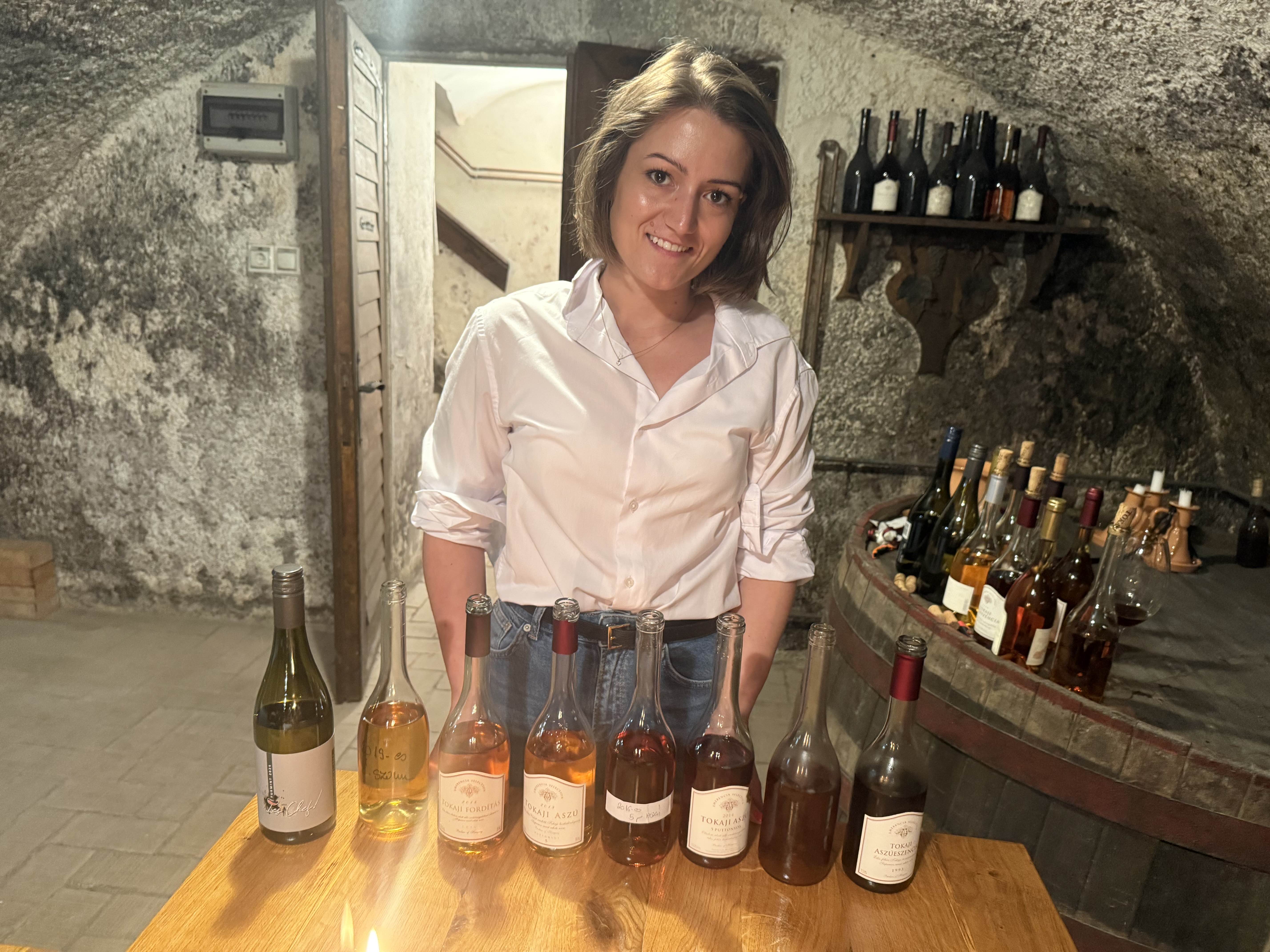
The tasting offers an opportunity to follow not only the evolution of Emerencia Selection’s wines, but also that of the family itself and the way it interprets Tokaj.
The tasting begins with the Tokaji Furmint 2024, a dry, food-friendly wine. Its aromatic profile revolves around yellow fruit, accompanied by a distinct note of lemon candy. The palate is direct and provides a clear-cut opening, almost a statement of intent before entering the realm of sweetness and botrytis.
With the Tokaji Édes Szamorodni 2019, the register changes. Apricot meets a delicate hint of ginger, but what is most striking is its remarkable drinkability. The sweetness never weighs down the palate, supported by the freshness that is one of the defining characteristics of Tokaj’s great sweet wines.
The Tokaji Fordítás 2018, on the other hand, introduces one of the most distinctive styles in the local tradition. Fordítás is made by reusing the already pressed mass of Aszú berries, which undergoes a second maceration with must or wine from the same vintage. It is an ancient practice designed to extract what the berries still have left to give. Emerencia’s 2018 has 148.3 g/l of residual sugar, 7.9 g/l of acidity and 11% alcohol by volume. In the glass, it shows a light amber colour, with notes of walnuts and pine nuts that curiously evoke a Mediterranean character, almost creating a sensory bridge between Tokaj and landscapes much farther south.
The tasting then enters the world of Aszú with the Tokaji Aszú 5 Puttonyos 2018. The aromas become more pronounced and its personality more assertive, almost masculine. But it is Laura who provides the most interesting key to understanding the wine. In her words, it represents the union between the old and the new style. A definition that goes beyond the tasting itself and becomes a statement of the winery’s philosophy: preserving Tokaj’s identity without allowing tradition to become immobility.
The comparison with the Tokaji Aszú 5 Puttonyos 2016 makes the effects of evolution immediately perceptible. The colour becomes darker and the aromatic profile shifts towards caramel and toffee, crossed by a subtle note of kerosene. Only two years separate the 2016 and 2018 vintages, yet in the glass the distance between them seems far more pronounced.
With the Tokaji Aszú 5 Puttonyos 2014, the wine becomes even darker and denser. Notes of caramelised orange, almond and candied citrus peel emerge. The analytical data — 159.3 g/l of sugar, 9.42 g/l of acidity and 9.5% alcohol by volume — reveal considerable concentration, supported, however, by equally remarkable acidity. But in the history of Emerencia, 2014 is more than just a vintage. It is the year in which Hermann Emerencia actively involved Laura in the work of the winery. The sequence of wines thus also becomes a story of generational succession. Just as the Aszú speaks of time, a new chapter begins within the family.
The Tokaji Aszú 6 Puttonyos 2019 reveals a new dimension. The nose is unusual, extroverted without being predictable. Sugared almonds and red fruits lead towards nuances that almost evoke Sicily, surprisingly distant from the aromatic imagery one might expect in Tokaj. On the palate, in contrast to its exuberant nose, the wine unfolds with remarkable softness. It seems to follow an expressive path of its own, without relinquishing the identity of Aszú.
The leap in time becomes considerable with the Tokaji Aszú 6 Puttonyos 2000. The colour is darker, the texture denser and the sweetness more pronounced, almost suggesting a liqueur-like sensation. The aromatic profile shifts towards cherries in alcohol, tobacco leaves and persimmon, while the density of the palate bears witness to the effects of long ageing. A direct comparison with the 2019 makes it possible to observe in the glass what almost twenty years can do to a great Aszú. The fruit changes its expression, fresh notes gradually give way to tertiary aromas, and the wine gains depth.
Finally, the tasting reaches its culmination with the Tokaji Aszúeszencia 1993. It is not simply the oldest wine in the tasting. It is the first vintage produced by Laura’s mother, and therefore carries a significance that extends far beyond its oenological value. Aszúeszencia also belongs to the history of Tokaj: a category distinct from Eszencia and one that is no longer used in the modern classification of Tokaji Aszú.
Its colour is the darkest of the entire sequence, a deep amber shaped by time. On the nose, wafts of coffee and barley emerge alongside notes of dried fruit and yellow-fleshed fruit, meeting without one overwhelming the other. And yet, what is most striking after more than thirty years is the way the acidity still manages to keep the palate alive, counterbalancing concentration and sweetness with freshness. A wine of such complexity could find an ideal companion in 70% dark chocolate, capable of matching its intensity and persistence.
Before this 1993 Aszúeszencia, a portrait of time seems to unfold. In the glass is a mother’s first vintage; on the other side of the table sits a daughter who, more than thirty years later, continues and improves upon the work begun then. The value of that still-vibrant acidity lies precisely here, as though time had shaped the wine without severing its connection to the past.
At Emerencia Selection, time is not merely what transforms wine. It is what binds one generation to the next, in a legacy of both tradition and evolution.